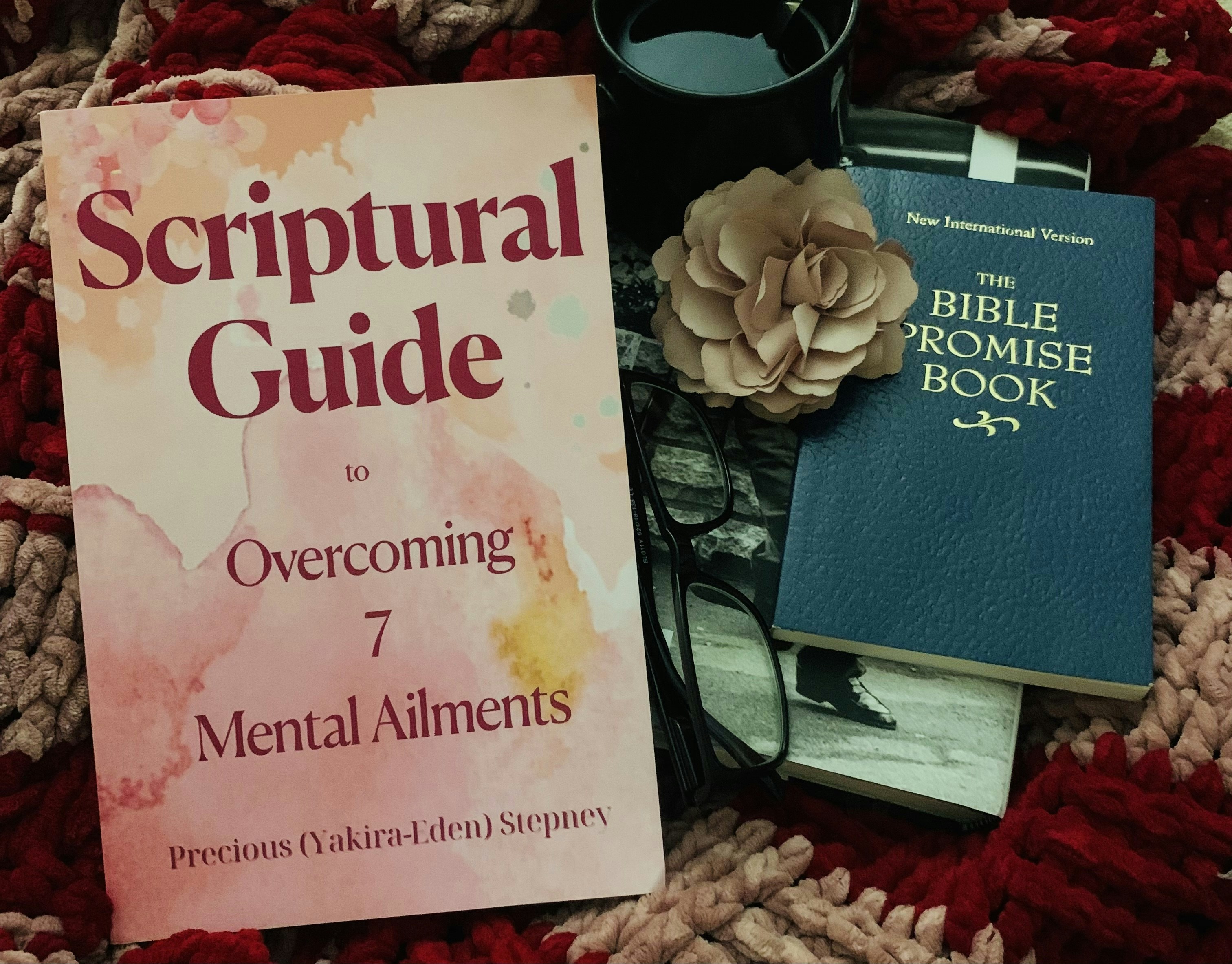

- SECTION 1: WHAT MENTAL EXHAUSTION FEELS LIKE FOR A CHRISTIAN
- SECTION 2: THE LIE OF “IF I HAD MORE FAITH, I WOULDN’T FEEL LIKE THIS”
- SECTION 3: THE BRAIN AND THE SOUL ARE NOT ENEMIES
- SECTION 4: WHEN DEPRESSION MAKES GOD FEEL FAR
- SECTION 5: HOW TO HOLD FAITH WHEN YOUR ENERGY IS LOW
- SECTION 6: THERAPY, MEDS, AND CHRISTIANITY
- SECTION 7: WHAT SCRIPTURE ACTUALLY OFFERS TO THE DEPRESSED
- SECTION 8: HEALING DOESN’T MEAN GOING BACK TO WHO YOU WERE
- SECTION 9: YOU ARE NOT DAMAGED GOODS TO GOD
- SECTION 10: IF YOU’RE STILL HERE, THAT’S FAITH
- CONCLUSION
Intro: When Your Brain Is Tired but You Still Believe
There are days when faith doesn’t feel heroic. It feels like getting out of bed when everything in your body says no. It feels like whispering “God help” because full prayers require too many words. It feels like trying to believe in joy when your brain is stuck in gray.
If that’s you, you’re not weak. You’re not a failed believer. You’re not dramatic. You’re human — and humans get tired. They get mentally exhausted. They get depressed. And depression does not erase God’s presence. Tired does not mean faithless. Exhaustion does not mean abandoned.
This guide isn’t about pretending everything is fine. It’s about learning how to hold faith when life is heavy, when your brain is slow, when motivation has left the chat, and when spiritual life feels like lifting weights underwater.
SECTION 1: WHAT MENTAL EXHAUSTION FEELS LIKE FOR A CHRISTIAN
Most Christians aren’t confused about faith. They’re confused about why faith doesn’t magically fix their mental state.
Mental exhaustion for a believer can look like:
- Overthinking everything
- Feeling numb even when you pray
- Dragging yourself through the day
- Feeling guilty for not doing more
- Crying for no clear reason
- Avoiding people because it’s too much
- Feeling like God is far even if you know He isn’t
It’s important to make one thing clear: mental exhaustion isn’t rebellion. It’s not the same as quitting God. It’s not a sign you’ve lost faith. It’s a sign your nervous system is overloaded.
Christians can still experience:
- depression
- anxiety
- burnout
- fatigue
- sadness
- confusion
Not because they’re bad Christians, but because they’re living human lives in a broken world with real nervous systems that get worn down.
SECTION 2: THE LIE OF “IF I HAD MORE FAITH, I WOULDN’T FEEL LIKE THIS”
One of the most damaging beliefs in Christian culture is the idea that emotions are evidence of spiritual ranking. That if you’re sad, anxious, or depressed, it must be because you aren’t praying enough, reading enough, or trusting enough.
But scripture never promises that believers won’t struggle emotionally. In fact, many Biblical figures did:
David wrote psalms that sound like clinical depression
Elijah collapsed under a tree and asked God to end his life
Job lost everything and sat in silence for days
Jeremiah cried so much he was nicknamed the “weeping prophet”
Paul described being “pressed beyond measure”
The Bible doesn’t hide mental struggle. Christians did not invent positivity culture; the Bible certainly didn’t.
Faith is not the absence of emotional struggle. Faith is trusting God in the middle of it.
SECTION 3: THE BRAIN AND THE SOUL ARE NOT ENEMIES
Here’s where mentally exhausted believers get stuck:
“If God can heal, why won’t He fix my brain?”
Because your brain is an organ. Just like your heart, lungs, liver, skin, and bones. It gets tired. It gets dysregulated. It needs rest, care, and sometimes professional support.
A Christian with asthma uses an inhaler. A Christian with diabetes takes insulin. A Christian with depression might need therapy, medication, or nervous system support. None of these things cancel God.
God is not threatened by science. The same God who designed your soul designed your nervous system.
SECTION 4: WHEN DEPRESSION MAKES GOD FEEL FAR
One of the cruelties of depression is that it makes everything feel distant — including God. But distance in feeling does not equal distance in reality.
Depression lowers motivation, dulls emotion, and reduces pleasure. It does not remove the Holy Spirit.
Sometimes faith in depression looks like:
- sitting quietly
- listening instead of talking
- reading one verse instead of a chapter
- praying in one sentence
- showing up in small ways
If that’s all you can do right now, that is not failure. That is resilience.
SECTION 5: HOW TO HOLD FAITH WHEN YOUR ENERGY IS LOW
This section is practical and SEO-friendly. Strategies that don’t require tons of energy:
1. Start With Micro-Prayers
You don’t need paragraphs. You need honesty.
Examples:
- “God, be near.”
- “God, I’m tired.”
- “God, help me.”
- “God, stay with me.”
Jesus never required impressive language. He responds to truth.
2. Reduce Spiritual Pressure
You don’t have to lead worship in your bedroom. You don’t have to become a theologian overnight. You don’t have to achieve perfect quiet time routines.
Spiritual pressure often makes depression worse because it adds guilt on top of fatigue.
Replace performance with presence.
3. Stop Interpreting Emotions as Theology
Your sadness does not mean God is silent.
Your anxiety does not mean God is angry.
Your numbness does not mean God is gone.
Feelings are data, not doctrine.
4. Add Nervous System Care
Faith is not just spiritual. The body impacts the mind which impacts the soul’s experience. You don’t need extreme routines. Start with basics:
sunlight exposure
hydration
small meals
stretching
slow breathing
reduced late-night doom scrolling
talking to someone safe
These are small, but depression makes small things feel impossible — which is why small counts.
SECTION 6: THERAPY, MEDS, AND CHRISTIANITY
Therapy does not replace God. It partners with wisdom. Scripture commands believers to seek wisdom, counsel, and healing. That includes mental health care.
Medication is not a lack of faith either. It’s a tool. Tools are allowed.
You don’t get a spiritual badge for suffering untreated.
SECTION 7: WHAT SCRIPTURE ACTUALLY OFFERS TO THE DEPRESSED
Scripture does not promise:
constant happiness
instant healing
zero hardship
Scripture promises:
presence
strength in weakness
hope beyond circumstances
compassion
rest for burdens
grace for the tired
Verses that can help you
Psalm 34:18 — “The Lord is near to the brokenhearted”
Matthew 11:28 — “Come to me, all who are weary”
2 Corinthians 12:9 — “Power made perfect in weakness”
Psalm 42 — asks “Why are you downcast?” — an ancient depressive episode
Notice scripture talks to exhausted humans, not perfect ones.
SECTION 8: HEALING DOESN’T MEAN GOING BACK TO WHO YOU WERE
A lot of Christians want the old version of themselves back. The energetic one. The motivated one. The joyful one.
But healing rarely sends you backwards. Healing builds a different self — one that understands limits, softness, dependency, honesty, and surrender.
Depression can make you want escape. Faith invites transformation.
SECTION 9: YOU ARE NOT DAMAGED GOODS TO GOD
Depression can make you believe your sadness is a burden to God. But God specializes in people who feel too heavy for everyone else.
The cross is not proof that God expects you to be strong. It’s proof that God knows you won’t be.
SECTION 10: IF YOU’RE STILL HERE, THAT’S FAITH
Faith for the mentally exhausted Christian is not glamorous. It’s quiet. It’s gritty. It’s slow. It’s held together by small yeses.
Your survival is not lack of faith. It is faith.
Anxiety & Healing Journal (10-Day Guided Faith Workbook for Overthinkers) free download
CONCLUSION
If you’re a Christian dealing with depression or mental exhaustion, you are not alone, you are not faithless, and you are not failing.
God sees tired Christians. God stays near the mentally exhausted. God walks with the depressed and the anxious. Faith was never reserved for the emotionally perfect.
Sometimes faith looks like worship. Other times it looks like breathing, trying, resting, and not quitting.
And if today all you can say is:
“God, my brain is tired.”
He hears you.
He stays.
He doesn’t leave tired believers behind.